 Tasman
Abel Tasman National Park
Mārahau, Abel Tasman National Park
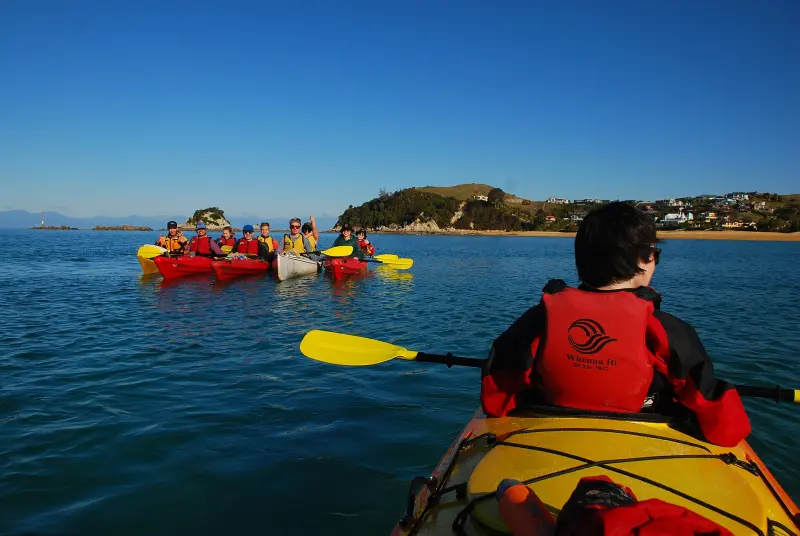
Golden beaches, granite headlands and sheltered bays. Guided trips and kayak rentals leave from Mārahau, the southern gateway to the park.
Beginner-friendlyIntermediate
Kayaking guide
New Zealand's Boating Safety Code applies to kayaks, canoes and stand-up paddleboards as well as boats. DOC's version:
DOC warns not to rely on a mobile phone: it might go overboard, run flat or be out of range. Better options, depending on where you're paddling:
Keep at least one device on your body, not in the kayak. If you capsize and lose the boat, you still need to call for help.
DOC notes there's a high chance of falling in when you kayak, canoe or paddleboard, so know your swimming ability before you go. Practise getting back into your kayak in calm, shallow water. Dress for the water temperature, not the air: on rivers, DOC recommends a drysuit or wetsuit.
DOC says never leave children unattended in a kayak, canoe or on a paddleboard.
Rivers bring extra hazards. DOC's river safety advice:
A guided trip is the simplest way to stay safe while you build experience. See our guided vs independent kayaking guide.
TasmanMārahau, Abel Tasman National Park
Golden beaches, granite headlands and sheltered bays. Guided trips and kayak rentals leave from Mārahau, the southern gateway to the park.
 Waikato
Taupō, Central North Island
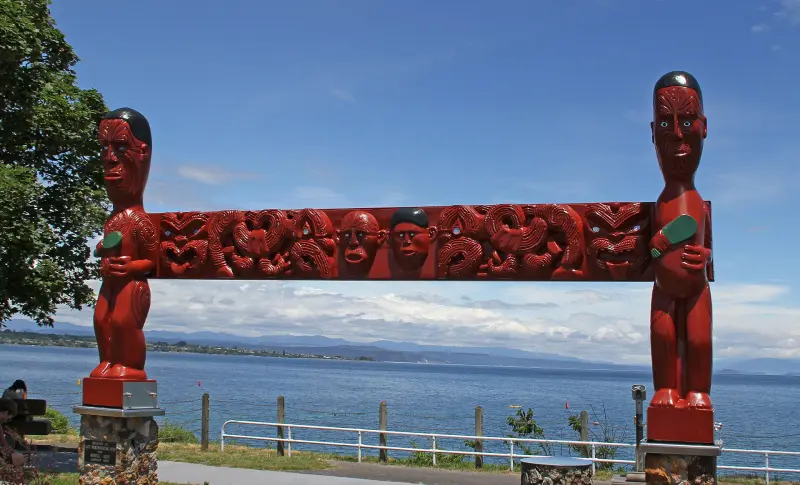
Paddle to the Ngātoroirangi Mine Bay Māori rock carvings, a 14-metre carving by Matahi Brightwell that you can only reach by water.
 Fiordland
 National Park
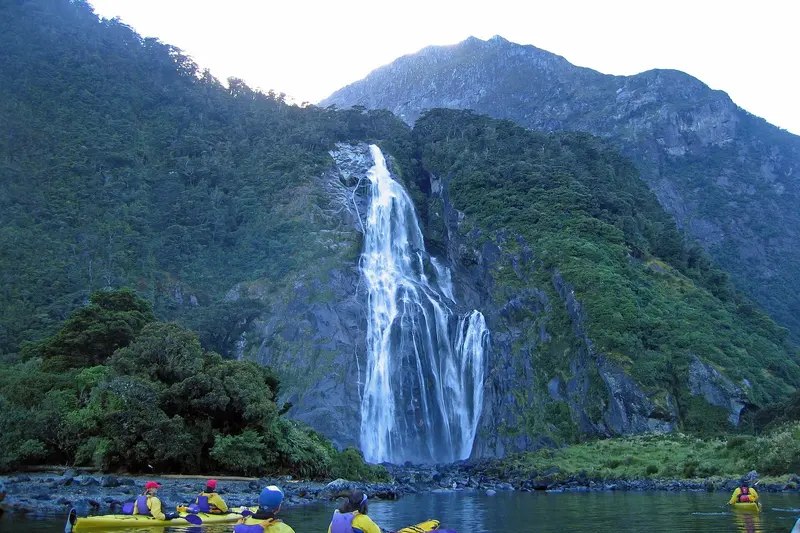
Paddle beneath Mitre Peak in Fiordland National Park. Guided trips launch from Deepwater Basin, from short easy paddles to full days on the fiord.