Campervan rental guide
Planning a Campervan Road Trip in New Zealand: Seasons, Ferries and Overnight Stops
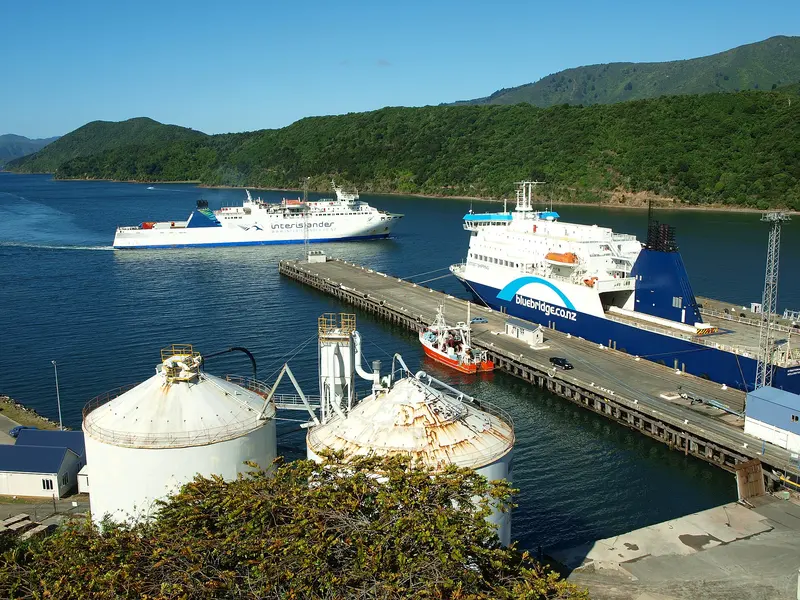
Photo: “Interislander turning at Picton” by jokertrekker, CC BY 3.0, via Wikimedia Commons
When to go
- December–February (peak): the warmest weather, longest days and busiest campgrounds. Book early.
- October–November and March–April (shoulder): quieter roads, lower rates and often settled weather.
- June–August (winter): good for South Island snow trips, but expect closed high-altitude passes and short days.
Rental rates follow these seasons. The same vehicle can cost very different amounts in January and May.
One island or both?
Most campervan trips work best when they centre on one island rather than rushing both. Some ideas:
- North Island: the Bay of Islands, Rotorua and Taupō, Wellington. See our Rotorua and Taupō camping guides.
- South Island: Aoraki/Mount Cook, Queenstown, Fiordland and the West Coast. Follow our 14-day South Island itinerary.
Crossing Cook Strait
The Interislander and Bluebridge ferries run between Wellington and Picton:
- Book your vehicle on the ferry as early as possible in summer.
- Height and length limits apply. Tell your rental company your route, so it can confirm the vehicle can travel.
- Some vehicles can't go on the ferry at all.
- Some rental companies can book ferry tickets with your hire.
One-way hires
New Zealand is long and narrow, which suits one-way trips. One-way fees vary by route and season, and some companies charge none. Because vehicles tend to build up in the South Island at certain times of year, northbound deals from Christchurch are common.
Where to stay overnight
- Holiday parks: power, showers, kitchens and dump stations. A good choice for your first night. See our holiday parks guide.
- DOC campsites: more than 250 are vehicle-accessible, many in spectacular spots. See our DOC campsites guide.
- Freedom camping: only where allowed. On council land you usually need a certified self-contained vehicle. Read the freedom camping rules.
Dump stations and water
DOC says only a few of its campsites have dump stations, so use the facilities in towns. Empty the toilet cassette and waste water every day or two, and only at an authorised dump station. Never empty them into campsite toilets.
Fuel and Road User Charges
Many larger rentals run on diesel. In New Zealand, diesel vehicles pay Road User Charges by distance, and rental companies recover these when you return the vehicle. Include this in your budget alongside fuel.
Allow more time than you think
Motorhomes are slower than cars on hills and winding roads, and the best stops take time. Some roads close in bad weather. DOC says the Milford Road can close for weather, rockfall and winter avalanche risk, and freedom camping isn't allowed within 200 m of it.
Frequently asked questions
Can you take a rental campervan on the ferry between the North and South Islands?
Usually, yes. Most rental campervans and motorhomes can travel on the Interislander or Bluebridge ferry between Wellington and Picton, but height and length limits apply and vehicle space is limited in summer. Some vehicles aren't allowed, so check with your rental company before you book.
When is the cheapest time to hire a campervan in New Zealand?
Rates are usually lowest outside the December–February peak. The shoulder months of October–November and March–April often bring quieter roads and lower rates.
Sources
- Department of Conservation: campervans on public conservation land
- Department of Conservation: freedom camping
- Department of Conservation: Milford Road and Milford Sound area
- Interislander: travelling with a campervan or motorhome
- Bluebridge: vehicle fares
- NZ Transport Agency Waka Kotahi: road user charges
More campervan guides
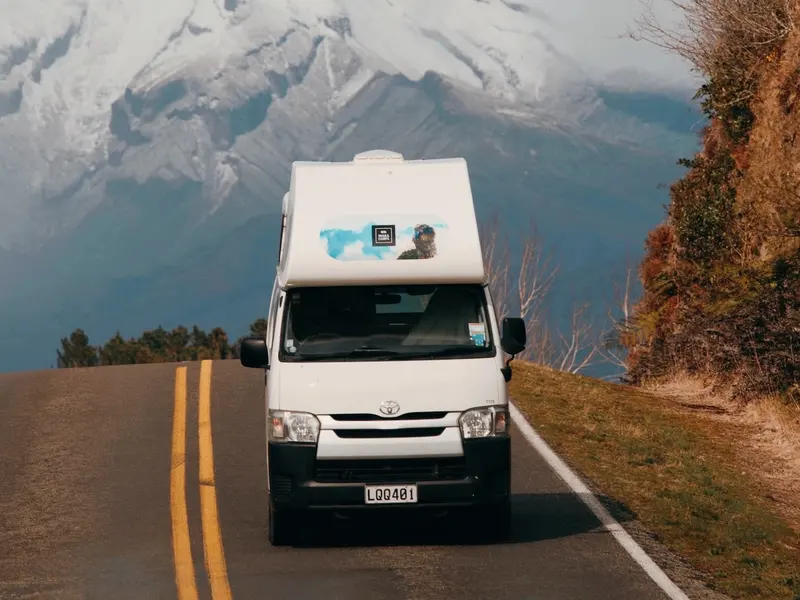
How to hire a campervan in NZ
Driver licences, minimum ages, choosing a vehicle and branch, pick-up day and returning the van.
Read more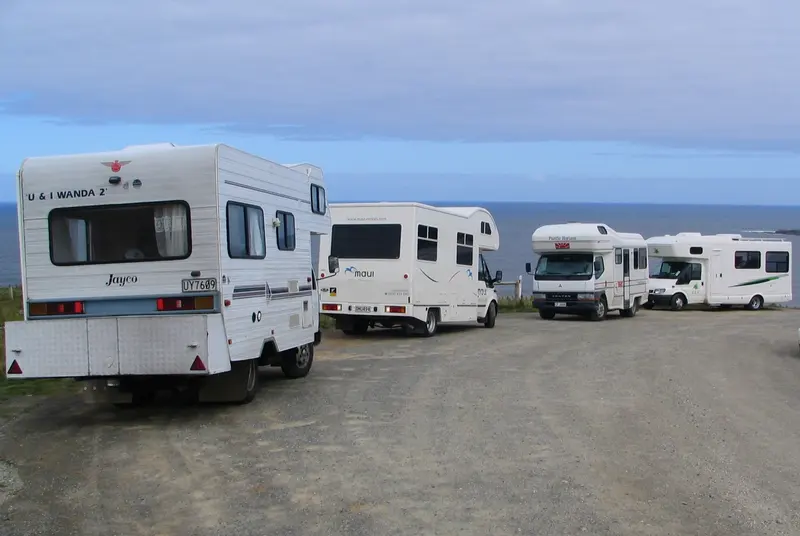
Campervan vs motorhome
Size, bathrooms, beds, driving and cost: how to choose between a campervan and a motorhome for your NZ road trip.
Read more
Campervan insurance explained
What excess and bonds mean, how reduction options work, and the exclusions that catch people out.
Read more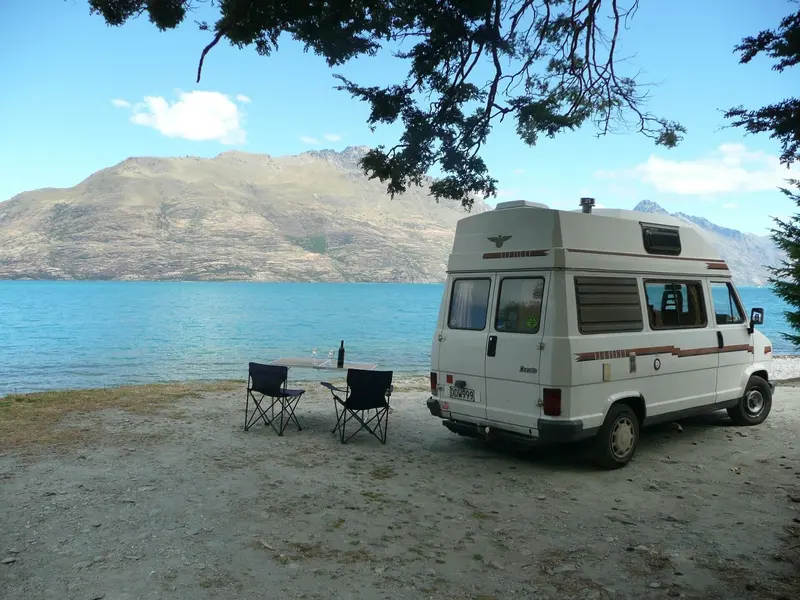
Self-contained campervan rules
What certified self-contained means, the green warrant, and where you can and can't stay in a rental campervan.
Read more
14-day South Island campervan itinerary
A Christchurch loop through Tekapo, Aoraki/Mount Cook, Wānaka, Queenstown, Fiordland and the West Coast, with distances and where to stay.
Read more