Whangārei Travel Guide 2026 – Best Things to See & Do
Overview of Whangārei
Whangārei — Northland's only city with a population of around 95,000 — sits at the head of a sheltered harbour on the east coast of Northland, approximately 160 kilometres north of Auckland. It serves as the principal urban centre for the entire Northland region, which stretches another 250 kilometres north to Cape Reinga at the tip of the North Island. Despite being overshadowed by the tourist attention focused on the Bay of Islands and the Far North, Whangārei has genuine attractions of its own and is an excellent base for exploring the wider Northland region.
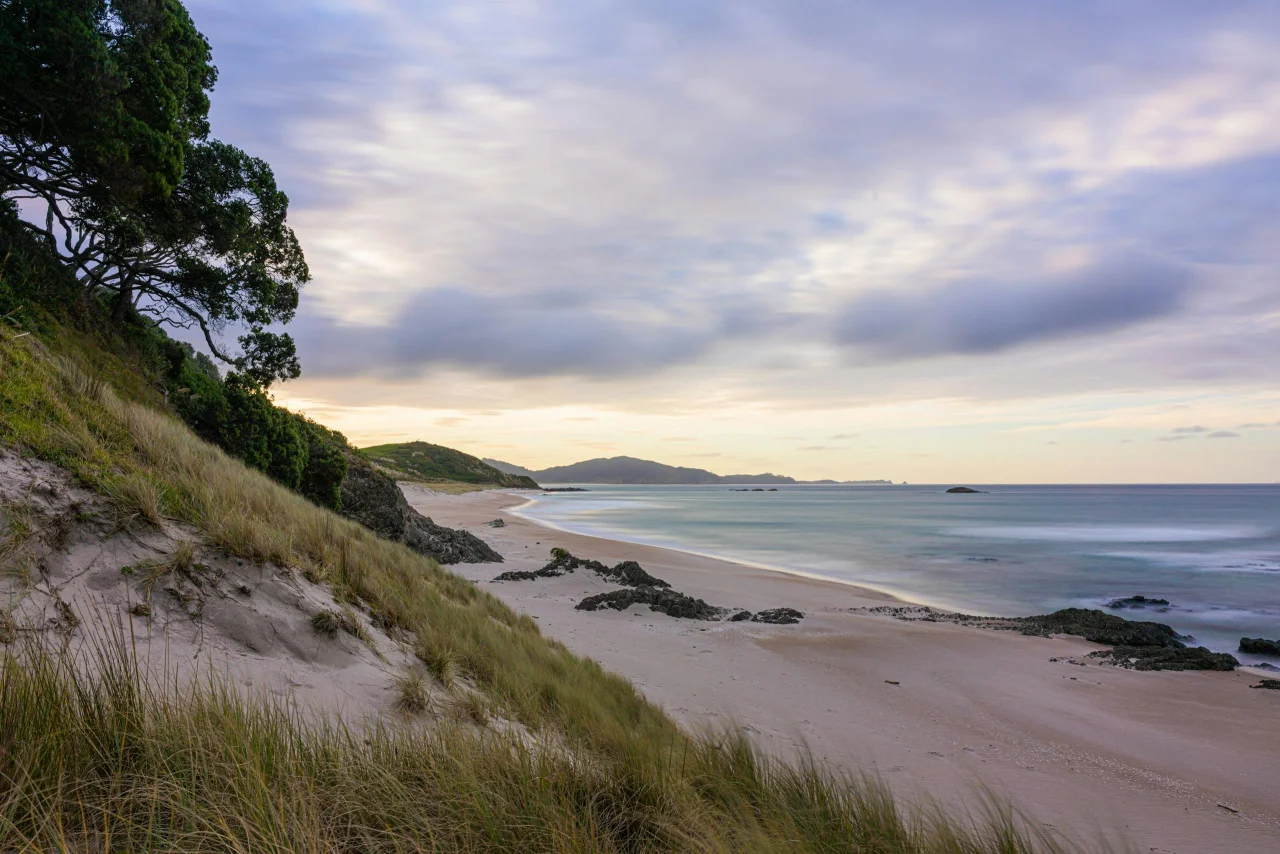
The city has a subtropical climate — warm and humid, with very mild winters — and enjoys more sunshine than Auckland. Its harbour setting is pleasant, and the Town Basin waterfront precinct has been transformed over recent decades from a working port into a vibrant centre for art galleries, craft studios, cafés, and the famous craft clock museum. The surrounding landscape is varied and often dramatic: the Whangarei Heads headland to the southeast provides spectacular coastal walking, the Tutukaka Coast to the northeast is internationally regarded as one of the finest diving destinations in the world, and the Waipoua Forest — home to the ancient kauri giants — lies just 90 kilometres to the northwest.
Whangārei is also the entry point for thousands of international sailors who arrive each year on the northern end of the Pacific circuit, making it New Zealand's most internationally transited small city. The Town Basin marina is frequently full of ocean-going yachts from the Americas, Europe, and the Pacific Islands.
Getting to Whangārei
Whangārei Airport (WRE) is served by Air New Zealand with direct flights from Auckland (35 minutes). By road, Whangārei is 2.5 hours north of Auckland via State Highway 1 — a straightforward drive through the rolling farmland and mangrove-fringed estuaries of Northland. InterCity coaches and Northlander bus services connect Whangārei with Auckland and with Paihia and Kaitaia to the north. The city is easily done as a day trip from Auckland, though a one-night stay allows time to explore the surrounding coast and hinterland properly.
Top Attractions in Whangārei
Whangarei Falls
Whangarei Falls is one of the most accessible and photographically rewarding waterfalls in Northland — a 26-metre curtain of water plunging from a basalt cliff edge into a deep pool surrounded by lush native bush, located just 5 kilometres northeast of the city centre in the Tikipunga suburb. The falls are within the Whangarei Falls Scenic Reserve and are reached by a short, well-formed loop track that circles the falls and takes approximately 20 minutes to complete.
The track descends from the upper viewpoint (which provides the classic postcard perspective on the falls from above) through native bush to the pool at the base, where the mist from the falls creates a microclimate of extraordinary lushness. Native birds — including tūī, fantail (pīwakawaka), and the occasional native pigeon (kererū) — are abundant in the reserve. The falls are fed by the Hatea River and are at their most impressive after rain. The reserve has a picnic area at the top and the entire circuit, including the falls viewpoint from both above and below, can be completed in under an hour. Entry is free.
Poor Knights Islands Marine Reserve
The Poor Knights Islands Marine Reserve, located 24 kilometres offshore from the Tutukaka Coast northeast of Whangārei, was rated by the late Jacques Cousteau as one of the world's top ten dive sites. The islands themselves are a raised volcanic plateau, now uninhabited and access-restricted to protect their extraordinary ecological value, but their underwater world is accessible to divers and snorkellers year-round.
The marine reserve's exceptional quality stems from several factors: the islands sit at the confluence of warm subtropical and cooler temperate currents, creating extraordinary biodiversity; the water clarity regularly exceeds 30 metres; and the dramatic underwater topography — caves, arches, tunnels, and walls — provides habitat for an enormous range of species. Lord Howe coralfish, Garibaldi damselfish (at the southernmost extent of their range), large kingfish, blue maomao schools in the thousands, and occasional visiting whale sharks and manta rays make every dive here genuinely memorable. Dive operators depart from Tutukaka Marina, 25 kilometres northeast of Whangārei, with trips running daily weather permitting. Snorkelling trips are also available for non-divers.
Advertisement
Town Basin Marina & Arts Trail
The Town Basin is the revitalised heart of Whangārei's waterfront — a precinct of restaurants, cafés, galleries, and craft studios arranged around the marina that serves as the social centre of the city. The area has been developing since the 1990s and now hosts over 20 galleries and studios that make up the Whangarei Arts Trail, covering ceramics, jewellery, painting, sculpture, and glasswork by local and regional artists.
The famous Claphams Clocks Museum in the Town Basin houses the most extensive collection of clocks in the Southern Hemisphere — over 1,400 timepieces including tall case clocks, automata, cuckoo clocks, and marine chronometers. The collection is both eccentric and genuinely impressive. Alongside the museum, the outdoor Sculpture Walk follows the Hatea River from the Town Basin upstream through native plantings, with significant commissioned works placed throughout. The Town Basin also hosts regular markets and waterfront events throughout summer. Evening dining at the waterfront restaurants, watching the yachts in the marina as the sun goes down over the harbour, is one of Whangārei's uncomplicated pleasures.
Abbey Caves
Abbey Caves, 4 kilometres east of the city centre, are a network of three large limestone caves containing active glowworm populations — an accessible alternative to the more famous Waitomo Caves with a very different, more self-guided character. The caves (named Organ, Middle, and Ivy) are open during daylight hours and require no guide — you explore with a torch (bring your own or hire from the small kiosk) at your own pace through passages of varying complexity.
The glowworm population in the caves is substantial, particularly in the Organ Cave, which has a large chamber with a high ceiling that comes alive with blue-green bioluminescent dots in the dark. The caves also contain small streams that you must wade through in places, stalactites and stalagmites in varying degrees of development, and, on occasion, cave wetas (the large, prehistoric-looking native cricket). Gumboots and torches are recommended; the caves can be muddy after rain. The surrounding reserve has short walking tracks through native bush. Abbey Caves offer a refreshingly self-directed alternative to the commercial cave tour experience and are popular with local families.
Tutukaka Coast
The Tutukaka Coast stretches northeast of Whangārei for approximately 50 kilometres, encompassing a series of sheltered coves, rocky headlands, and golden sand beaches that are collectively one of the finest coastal destinations in Northland. The coast road from Ngunguru through Tutukaka and up to the lighthouse at the head of the coast provides one of the most scenic short drives in the region.
Tutukaka itself is the base for the Poor Knights Islands dive operations and has a pleasant marina, a good café, and the sense of a serious diving village rather than a generic tourist destination. Matapouri Beach — a sheltered bay accessed by a short walk from the road — is one of the most beautiful swimming beaches in Northland, protected from the prevailing swell with remarkably clear water. Whale Bay, a further short walk from Matapouri, is even more secluded and beautiful. The Tutukaka headland has a coastal walk that provides views out to the Poor Knights on the horizon and back along the coast toward Whangārei Heads. Swimming, snorkelling, and kayaking in the sheltered bays are excellent from November through March.
Best Time to Visit Whangārei
Whangārei's subtropical climate makes it a year-round destination, but the warm months (November–April) are optimal for diving, snorkelling, and beach activities on the Tutukaka Coast. The Poor Knights Islands diving is year-round but summer offers the warmest water and best visibility. The Whangarei Jazz and Blues Festival in July is one of the better regional winter events. Kauri forest walks in the Waipoua Forest (90 minutes northwest) are good in any season. Summer weekend markets at the Town Basin and the Onerahi foreshore are pleasant. Book Tutukaka dive spots in advance during December and January when demand from Auckland visitors is highest.
Where to Stay
The iStay Hotel in the Town Basin is the most centrally located full-service hotel, with marina views and easy access to waterfront dining. Lupton Lodge in a quiet residential area nearby is a pleasant boutique guesthouse. Tutukaka has the Pacific Rendezvous Resort — a cliff-top property with private beach access and outstanding coastal views that is popular with divers. The Whangarei Heads area southeast of the city has several self-contained cottages and holiday homes with direct access to beautiful beaches. Budget travellers will find the Whangarei Top 10 Holiday Park and Backpackers a reliable option near the Hatea River.
Food & Drink
The Town Basin has the best concentration of cafés and restaurants, with several waterfront options offering outdoor seating and harbour views. The Pohe Island Thursday Night Market (summer) is excellent. Tutukaka Marina has a reliable café popular with divers. The Northland region produces excellent avocados, citrus, and tropical fruits — roadside stalls between Whangārei and Dargaville are a great source of fresh local produce. Craft beer from the Lighthouse Brewery and McLeod's Brewery (Bay of Islands area) appears on taps throughout Northland.
Practical Travel Tips
- Poor Knights: Book dive or snorkel trips at least a week ahead in summer. Operators include Dive! Tutukaka, which has an excellent reputation.
- Kauri forests: Waipoua Forest (home to Tāne Mahuta, New Zealand's largest living tree) is 90 minutes northwest — combine with a Hokianga Harbour visit for a spectacular Northland day.
- Cape Reinga: The Far North and Cape Reinga are 3+ hours north of Whangārei; a two-day trip allowing an overnight stop is strongly recommended.
- Abbey Caves: Wear clothes you don't mind getting wet and muddy, and bring a powerful torch.
Stay in Whangārei
Find the best deals on hotels and accommodation in Whangārei for your holiday getaway.
Browse Hotels