Wellington Travel Guide 2026 – Best Things to See & Do
Overview of Wellington
Wellington — Te Whanganui-a-Tara in te reo Māori — sits at the southern tip of the North Island, cradling one of the most spectacular natural harbours in the Southern Hemisphere. As New Zealand's capital city, it punches far above its weight: a compact, walkable city of roughly 215,000 people that houses the national government, the national museum, a thriving arts scene, a world-renowned film industry presence, and what many critics genuinely regard as the best café culture in the country — all within a few kilometres of one another.
Wellington's geography is instantly striking. A steep, bush-clad amphitheatre of hills rises directly behind the waterfront, meaning the city's suburbs stack vertically as much as they spread horizontally. That topography drives the famous wind — Wellingtonians refer to their home as "Windy Wellington" with a mixture of resignation and pride — but it also creates spectacular elevated viewpoints and gives the inner city a density and energy that larger New Zealand cities sometimes lack.
Wellington has been New Zealand's capital since 1865, chosen for its central location relative to both islands. Today it remains the seat of Parliament, the Supreme Court, and most government ministries, giving the city a civic purpose that coexists comfortably with its creative identity. The nearby Miramar Peninsula is home to Weta Workshop and Park Road Post — the facilities behind the Lord of the Rings trilogy — making Wellington a genuine pilgrimage destination for film enthusiasts worldwide.
Getting to Wellington
Wellington Airport (WLG) is New Zealand's third-busiest airport, with frequent direct domestic flights to Auckland, Christchurch, and Queenstown. Air New Zealand and Jetstar both service the route. The airport sits just eight kilometres south of the CBD — a 20-minute drive or a straightforward bus connection via the Airport Flyer express service.
Visitors from the South Island have an iconic alternative: the Interislander ferry crosses Cook Strait between Picton and Wellington in roughly three hours, offering dramatic scenery through the Marlborough Sounds. Bluebridge operates a competing service. Both arrive at Wellington's waterfront terminal, making this one of the most atmospherically located arrival points of any city in the country.
Top Attractions in Wellington
Te Papa Museum
Te Papa Tongarewa — "the container of treasures" — is New Zealand's national museum and one of the finest in the Pacific. Spread across six floors on the Wellington waterfront, it houses the country's most significant collections covering Māori taonga (treasures), natural history, Pacific cultures, New Zealand art, and the nation's social history.
Admission to the permanent collection is free, which alone justifies a half-day visit. The Māori Court is outstanding: elaborately carved wharenui (meeting houses) stand within the building, and the curation presents living culture rather than archived artefacts. The natural history floors include a colossal squid specimen — one of only a handful in the world — and comprehensive exhibits on New Zealand's extraordinary geological story. The museum café and restaurant both have strong reputations, and the gift shop stocks high-quality New Zealand-made products. Allow at least three to four hours for a thorough visit.
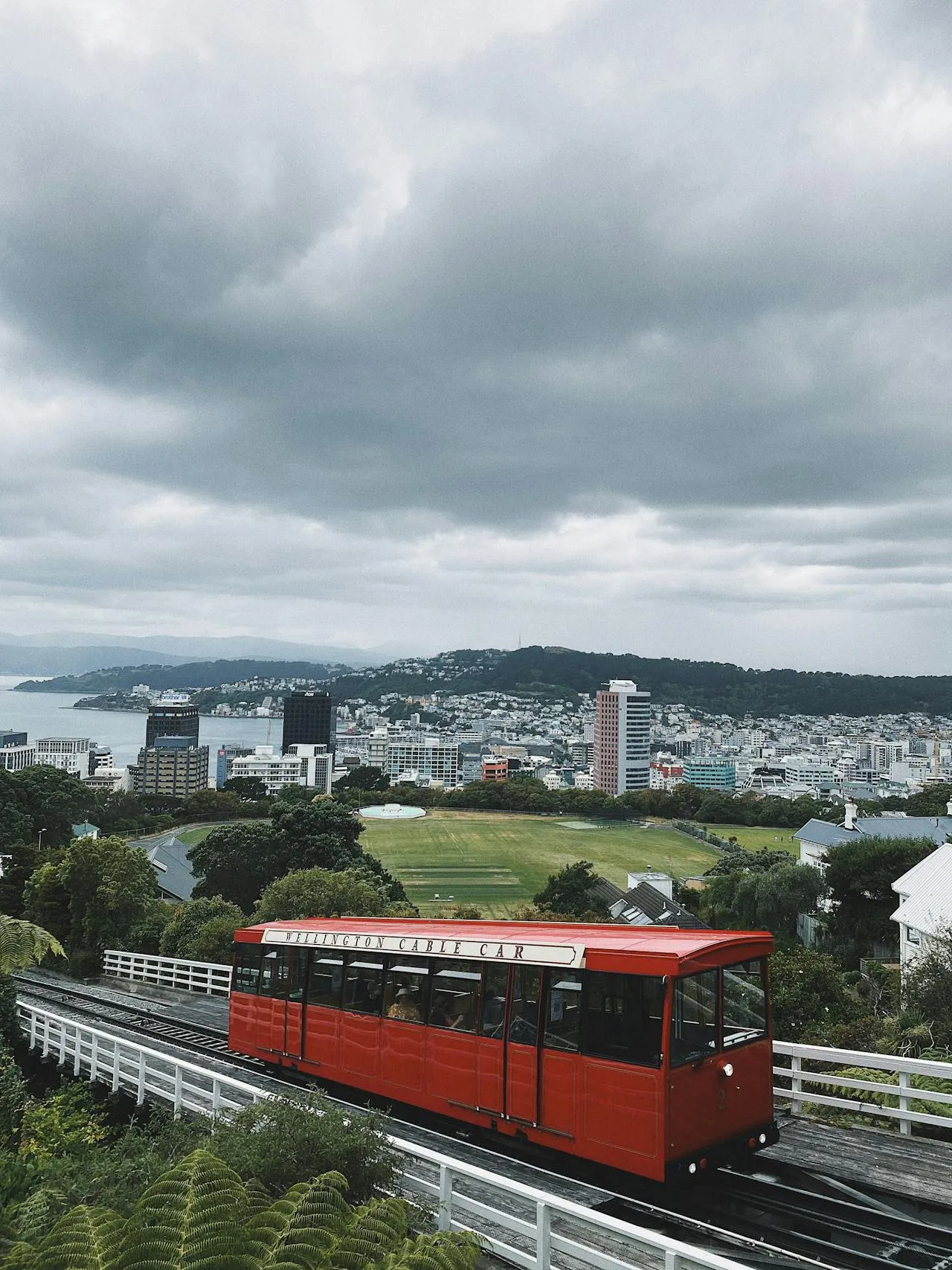
Wellington Cable Car
The Wellington Cable Car has been hauling passengers up the steep slope from Lambton Quay to Kelburn since 1902, making it one of New Zealand's oldest and most loved pieces of urban infrastructure. The four-minute ride covers 120 metres of elevation and deposits you at the Kelburn terminal, from which the views back over the city, harbour, and Remutaka Range are simply superb.
The current Swiss-built cable cars replaced the original wooden carriages in 1978 and operate every ten minutes throughout the day from early morning until late evening. At the top, the Cable Car Museum in the original 1902 winding house is free to enter and explains the system's engineering history in engaging detail. The adjacent Zealandia ecosanctuary is a short downhill walk from the terminal. The Wellington Botanic Garden also begins here, making this a natural starting point for a morning combining city views, native wildlife, and green space.
Advertisement
Cuba Street
Cuba Street is Wellington's most characterful thoroughfare — a pedestrianised strip through the heart of Te Aro that functions simultaneously as the city's bohemian high street, café central, live music spine, and most reliable place for unexpected encounters. The bucket fountain at the northern end, a beloved piece of kinetic sculpture installed in 1969, has become an unofficial city symbol.
The street's character comes from its mix: vintage clothing stores beside record shops, independent bookshops, tattoo parlours, and some of Wellington's most celebrated restaurants and bars. Fidel's Café is an institution, its walls plastered with revolutionary imagery. Loretta, Prefab, and Customs on Cuba are just three of the nearby cafés contributing to Wellington's outsized coffee reputation — the city reportedly has more cafés per capita than New York City. Cuba Street is best experienced on foot and at a leisurely pace.
Zealandia Ecosanctuary
Zealandia is one of New Zealand's most remarkable conservation achievements: a 225-hectare urban ecosanctuary enclosed by a predator-proof fence, allowing native wildlife to recover just two kilometres from the Wellington CBD. The sanctuary protects species functionally extinct on mainland New Zealand for decades before Zealandia's establishment in 2000, and visiting provides a window into what New Zealand's forests sounded and looked like before the introduction of rats, stoats, and possums.
Kākā (native parrots) now nest here in large numbers and regularly fly over inner Wellington suburbs — you may spot them from your hotel. Tuatara can be reliably observed in the enclosures. Little spotted kiwi have established a breeding population, and while daytime kiwi sightings remain rare, Zealandia's evening guided tours offer a genuinely good chance of seeing one in the wild. Entry includes 32 kilometres of walking tracks through the valley. Book evening tours well in advance during summer.
Mount Victoria Lookout
Mount Victoria — Matairangi in Māori — is Wellington's most accessible inner-city summit and provides the most complete panoramic view of the city, harbour, Hutt Valley, and on clear days the Kaikoura ranges of the South Island across Cook Strait. At 196 metres, it is easily reached by car via a winding road, or on foot via tracks through pine and broadleaf forest.
The summit has a circular viewing platform with orientation markers identifying landmarks in every direction. Sunrise and sunset are particularly rewarding times to visit, when the harbour reflects the changing light. Film enthusiasts may recognise the lower slopes — the forest scenes where Frodo hides from the Black Rider in The Fellowship of the Ring were filmed here. Walking up from Mount Victoria suburb takes about 25 minutes and is a pleasant way to earn the view.
Best Time to Visit Wellington
Wellington is a year-round destination, but timing your visit matters. Summer (December–February) brings long sunny days, temperatures around 17–21°C, and the city at its most vibrant. Wellington on a Plate food festival typically runs in August, drawing visitors specifically for its programme of dinners and tastings. The New Zealand Festival of the Arts runs in February–March of even-numbered years and fills the city with events. Winter (June–August) is mild, rarely below 8°C, though the wind can make it feel colder. The wind is unpredictable in all seasons — pack a windproof layer regardless.
Where to Stay
The CBD waterfront strip and suburb of Te Aro are the most convenient bases, with walkable access to all major attractions. The InterContinental and QT Wellington sit at the top of the market. The Bolton Hotel offers excellent mid-range rooms in the city centre. For a more characterful experience, the Tinakori Lodge in Thorndon occupies a restored Victorian villa near the Botanic Garden. Airbnb options in Mount Victoria, Oriental Bay, and Newtown provide the distinctive Wellington villa experience. Book ahead for February in even-numbered years during the Arts Festival.
Food & Drink
Wellington's coffee culture is internationally recognised — the standard of flat white across the central city is consistently excellent. Ortega Fish Shack on Majoribanks Street has long been celebrated for seafood. Logan Brown on Cuba Street occupies a gorgeous 1920s bank chamber and serves technically accomplished modern New Zealand cuisine. Garage Project in Aro Valley brews some of New Zealand's most inventive beers from a taproom that has become a pilgrimage point for beer enthusiasts. Wellington's proximity to Wairarapa wine country means regional pinot noir and sauvignon blanc feature prominently on wine lists across the city.
Practical Travel Tips
Wellington's compact CBD is best explored on foot — most central attractions are within 20 minutes' walk. The Metlink bus network covers wider suburbs efficiently; the Snapper card provides discounted fares and is available at convenience stores. The famous wind is unpredictable in all seasons — a packable windproof jacket is more useful than an umbrella. The Wellington i-SITE on Wakefield Street handles regional day trip bookings and Interislander tickets. For Weta Workshop experiences in Miramar, advance online booking is strongly recommended. Tipping is not expected in New Zealand.
Stay in Wellington
Find the best deals on hotels and accommodation in Wellington for your holiday getaway.
Browse Hotels