Rotorua Travel Guide 2026 – Best Things to See & Do
Overview of Rotorua
Rotorua — Rotorua-nui-a-Kahumatamomoe in full — is one of the most remarkable cities in the world, built directly atop one of the planet's most active geothermal zones. The evidence is everywhere: plumes of steam rise from gardens and pavements, the sulphurous tang of hydrogen sulphide drifts through the air (locals call it "the Rotorua smell" and barely notice it), and the lake that gives the city its name sits in an ancient volcanic caldera whose last major eruption was only 1,800 years ago.
Located in the Bay of Plenty/Waikato region of the North Island, Rotorua has been attracting visitors since the 1800s — initially for its thermal bathing and the famous Pink and White Terraces (destroyed in the 1886 Tarawera eruption), today for its extraordinary combination of geothermal experiences, living Māori culture, world-class mountain biking, and spa relaxation. The city has a population of around 75,000 and serves as one of New Zealand's premier tourism destinations year-round.
Rotorua is also one of the most significant centres of Māori culture in New Zealand. The Arawa people have lived here for centuries, and today their presence is felt everywhere from the carved gateways at the entrance to the city to the cultural performances, hangi feasts, and marae (village) experiences that visitors can participate in throughout the year. This intersection of natural spectacle and living culture makes Rotorua unlike anywhere else on earth.
Getting to Rotorua
Rotorua Airport (ROT) is served by Air New Zealand with regular flights from Auckland (50 minutes) and Wellington. The airport sits just a few kilometres from the city centre. Most visitors drive to Rotorua: it is approximately 3 hours south of Auckland on State Highway 1 and State Highway 5, or 1 hour from Tauranga. InterCity coaches run frequent services from Auckland, Hamilton, Tauranga, and Wellington, making it accessible without a car. The drive from Auckland via the Waikato is straightforward and passes through the lush farmland of the King Country.
Top Attractions in Rotorua
Te Puia & Pōhutu Geyser
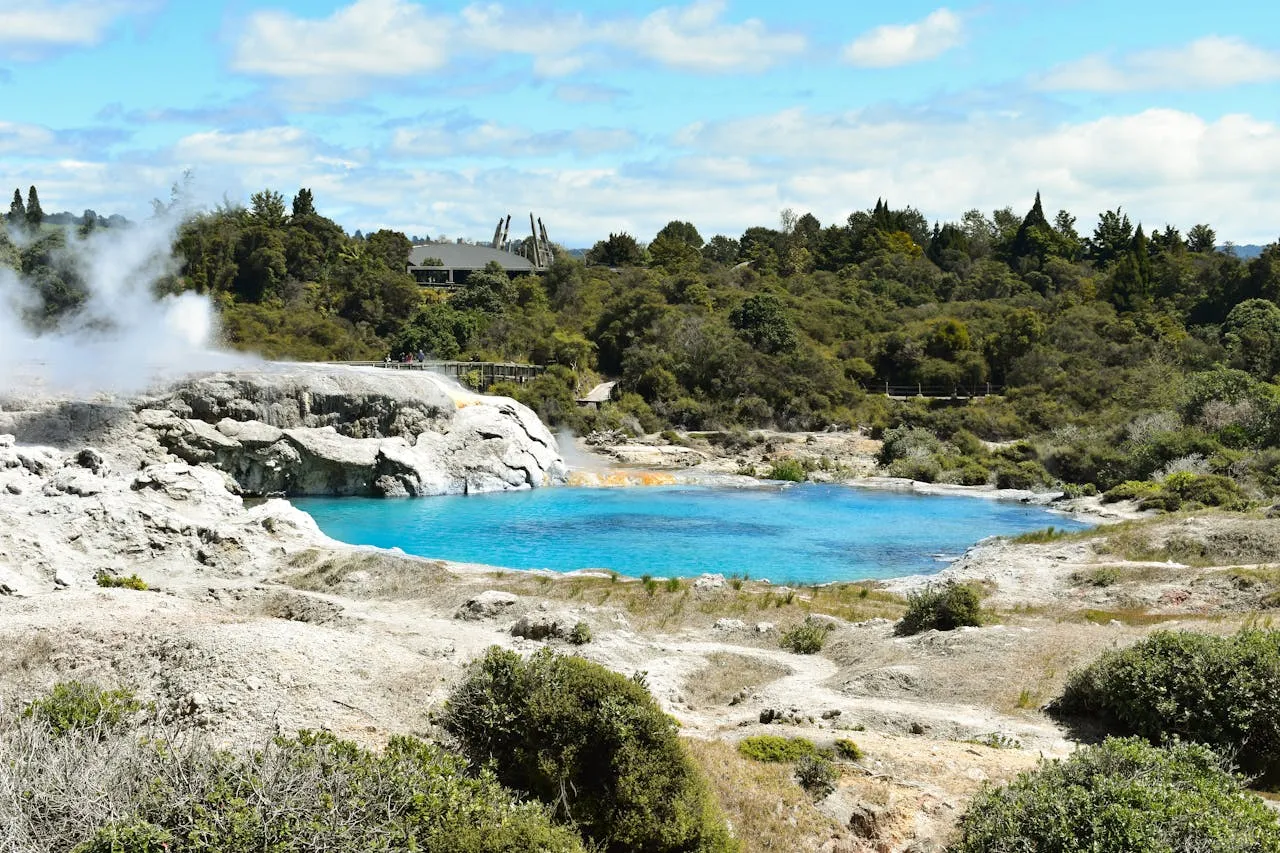
Te Puia is Rotorua's premier geothermal and cultural attraction, combining the spectacular Whakarewarewa geothermal valley with the New Zealand Māori Arts and Crafts Institute. At its heart is Pōhutu Geyser — New Zealand's largest active geyser, erupting to heights of up to 30 metres multiple times daily. Surrounding it are dozens of hot springs, boiling mud pools, and silica terraces that create an otherworldly landscape.
The cultural component is equally impressive. The institute has trained generations of tohunga whakairo (master carvers) and tā moko (tattoo) artists, and visitors can observe carvers at work in the working school. Guided tours explain the significance of geothermal activity to the local Ngāti Wāhiao people, who have lived alongside these thermal features for centuries. A traditional pōwhiri (welcoming ceremony) and kapa haka (cultural performance) are included in some tour packages. Evening hangi experiences at Te Puia — where food is cooked in the earth's natural heat — are unforgettable. Book ahead during peak season.
Wai-O-Tapu Thermal Wonderland
Wai-O-Tapu is perhaps the most visually stunning geothermal park in New Zealand — a 18-square-kilometre kaleidoscope of colour created by mineral deposits, boiling lakes, and hydrothermal activity. The park lies about 27 kilometres south of Rotorua and is best visited in the morning when the light is at its most flattering on the vivid pools.
The Champagne Pool is the centrepiece: a 65-metre-wide, 62-metre-deep boiling lake fringed by orange and yellow mineral terraces that look painted by an artist rather than formed by nature. The Lady Knox Geyser erupts daily at 10:15am — triggered by soap powder (a technique discovered accidentally by prisoners working the area in the early 1900s) — and is a reliable spectacle. The Artist's Palette, a series of vivid mud pools and silica flats in shades of yellow, green, and blue, provides extraordinary photography opportunities. Allow at least 90 minutes for the full self-guided walking circuit. Entry costs approximately NZD $40 per adult.
Advertisement
Polynesian Spa
The Polynesian Spa has been at the centre of Rotorua's hot pool culture since 1972, and a visit here remains one of the most civilised ways to experience the city's geothermal riches. Located on the shores of Lake Rotorua, the spa operates 28 outdoor pools fed by two different mineral spring systems: acidic Priest's water (said to benefit skin conditions) and alkaline Rachel's water (known for its effects on arthritis and rheumatism). Pool temperatures range from 38°C to 42°C.
The family bathing area includes pools of varying temperatures and is ideal for those visiting with children. The adult-only Lake Spa area offers a far more serene experience, with infinity pools appearing to float on the lake surface and views across to Mokoia Island at the lake's centre. Private pools for couples or families are available by prior booking. The Deluxe Bathing section strikes a balance between the two. The adjacent café serves food and drinks throughout the day. Sunset bathing at the Polynesian Spa, with alpenglow fading over the lake, is a Rotorua experience that stays with you long after you leave.
Redwoods Whakarewarewa Forest
The Redwoods Whakarewarewa Forest is one of Rotorua's great surprises: a 5,600-hectare forest planted in the early 1900s with Californian coastal redwoods, some now exceeding 70 metres in height, creating cathedral-like groves that feel utterly unlike any other New Zealand landscape. Located just 3 kilometres from the city centre, the forest has developed into one of the country's premier mountain biking destinations, with over 140 kilometres of maintained trails ranging from beginner-friendly to expert technical.
For those who prefer to stay on foot, the forest walks are exceptional. The Redwoods Treewalk offers something unique: a series of suspension bridges and platforms built among the canopy of the original 1901 redwood grove, accessible during the day and available for a magical after-dark lantern experience at night. The night walk, with the bridges illuminated by Japanese-designed lanterns against the dark canopy, is one of Rotorua's most romantic experiences and ideal for a special evening. The forest is free to enter; the Treewalk charges separately.
Tamaki Māori Village
Tamaki Māori Village offers one of New Zealand's most acclaimed cultural tourism experiences — a full evening immersion in te ao Māori (the Māori world) that has been operating since 1989 and continues to evolve and improve. The experience is set in a recreated traditional village modelled on a pre-European Māori settlement and begins with a pōwhiri (welcome ceremony) that treats visitors as manuhiri (guests) rather than tourists.
The evening includes a kapa haka performance incorporating poi, haka, waiata (song), and storytelling that communicates the history and values of the local Ngāti Tūwharetoa and Ngāti Pikiao people. The hangi feast — food slow-cooked for hours in an earth oven heated by volcanic rocks — is generous and delicious, featuring lamb, chicken, pork, vegetables, and kumara. The experience typically runs three to four hours and departs from central Rotorua. Tamaki is particularly thoughtful in its approach to cultural authenticity; it is operated by and employs members of local iwi (tribes) and reinvests in cultural preservation. Advance booking is essential.
Best Time to Visit Rotorua
Rotorua is a genuine year-round destination — the geothermal activity continues regardless of season, and the main cultural experiences operate throughout the year. Summer (December–February) is the busiest period with warm temperatures (25–28°C), school holiday crowds, and extended hours at most attractions. Autumn (March–May) is arguably the best time to visit: the mountain biking trails are in excellent condition, accommodation is more available, and the redwood forest is at its most atmospheric in soft autumn light. Winter (June–August) brings cooler, misty conditions that enhance the steaming landscapes considerably — geothermal pools and the forest are particularly beautiful in fog. Spring (September–November) sees the visitor numbers begin to build; book Tamaki Māori Village well in advance from October onwards.
Where to Stay
Rotorua has excellent accommodation across all price points, much of it capitalising on the geothermal landscape. Millennium Hotel Rotorua overlooks the lake and offers solid mid-range comfort. Sudima Hotel Lake Rotorua has its own geothermal pools on site. The Pullman Rotorua is a premium option near the CBD. For a more intimate experience, the numerous boutique lodges and thermal B&Bs in the quieter residential suburbs around the golf course area offer genuine hospitality and often include private hot pools. Fenton Street, running south from the CBD toward Te Puia, is lined with motels at various price points.
Food & Drink
Rotorua's dining scene has improved markedly over recent years. Eat Streat on Tutanekai Street is the main dining hub, with a diverse range of restaurants and cafés operating in a pedestrianised strip. Abracadabra Café specialises in Middle Eastern cuisine and has a devoted local following. For an authentic and memorable meal, a traditional hangi is the obvious choice — either at Tamaki Māori Village or various hotel hangi experiences. The surrounding Bay of Plenty region produces excellent avocados, kiwifruit, and citrus. Volcanic Hills Winery on the Skyline gondola at the top of the gondola operates a tasting room with panoramic views and serves wines from the wider Hawke's Bay and Marlborough regions.
Practical Travel Tips
- The Rotorua smell: The sulphurous smell is harmless and locals barely notice it. Most visitors stop noticing it after the first few hours.
- iSite: The Rotorua i-SITE on Fenton Street is excellent for booking activities and accommodation and has comprehensive local information.
- Geothermal safety: Never leave marked paths in geothermal areas — the ground can be dangerously thin above superheated water. Follow all signage and guide instructions.
- Driving: A car is useful for reaching attractions like Wai-O-Tapu and the redwood forest independently.
- Booking: Tamaki Māori Village and popular hangi experiences sell out — book at least a week ahead during summer and public holiday periods.
Stay in Rotorua
Find the best deals on hotels and accommodation in Rotorua for your holiday getaway.
Browse Hotels