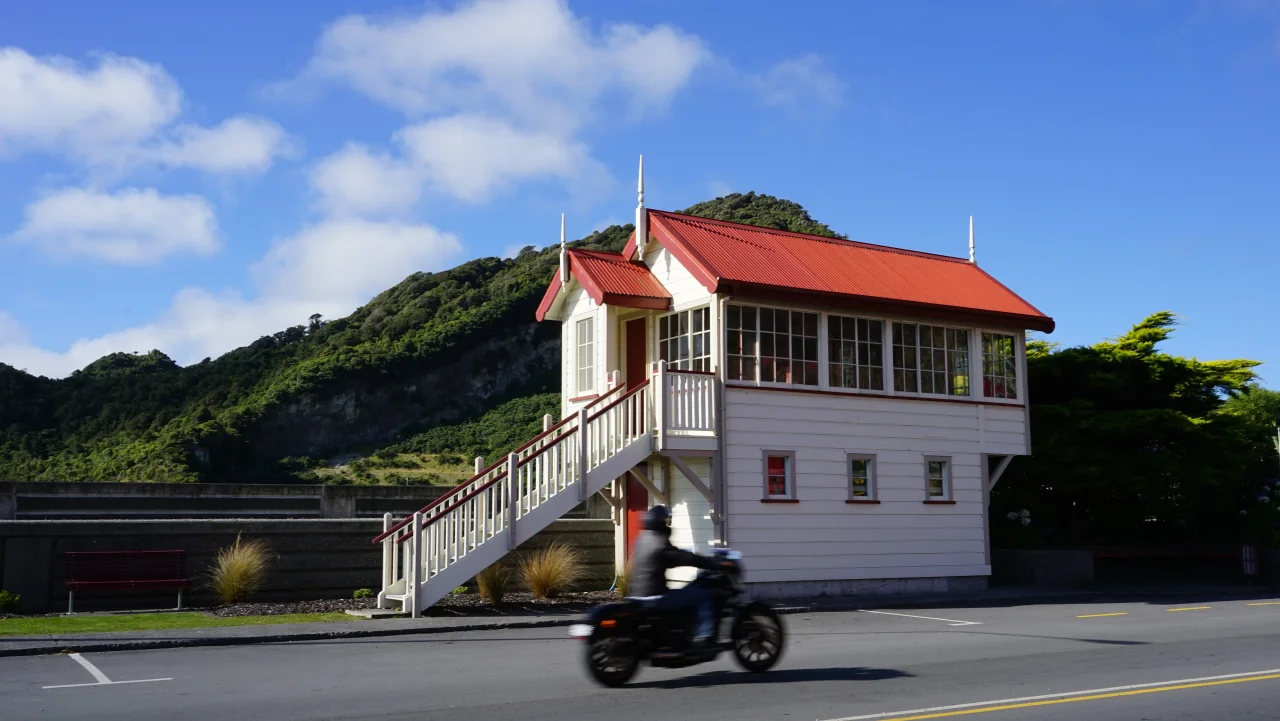
Greymouth Travel Guide 2026 – Best Things to See & Do
Overview of Greymouth
Greymouth — Māwhera in te reo Māori — is the largest town on the South Island's West Coast, a wild and dramatically scenic region where the Southern Alps meet the Tasman Sea in a collision of mountains, rainforest, glaciers, and black-sand beaches that is unlike anywhere else in New Zealand. The town of around 8,000 people sits at the mouth of the Grey River on the Tasman coast, and its position as the western terminus of the TranzAlpine scenic train from Christchurch makes it one of the most visited rail destinations in New Zealand.
The West Coast's character is shaped by its geography and history. Lying on the windward side of the Southern Alps, it receives the full force of the Tasman weather systems — rainfall in some parts exceeds 7,000 millimetres per year, and even Greymouth averages around 2,000 millimetres. This extraordinary rainfall has created the dense, ancient rainforest of kahikatea, rimu, and podocarp that clothes the coastal plains and lower mountain slopes and supports an incredible biodiversity of birds, insects, and plants. The high rainfall also makes it unpredictable for visitors — glorious sunshine can give way to driving rain within an hour.
The Gold Rush of the 1860s brought thousands of prospectors to the West Coast, and the subsequent coal mining era of the late nineteenth and twentieth centuries gave the region its particular working-class identity. Greymouth is also significant for pounamu (greenstone or jade) — a taonga (treasure) found only on the West Coast, which the Ngāi Tahu people quarried from mountain rivers for centuries and traded across the country. Pounamu carving remains a living craft in Greymouth, and several studios offer both carvings for purchase and workshops in the art.
Getting to Greymouth
Greymouth is the western terminus of the TranzAlpine train from Christchurch — a 4.5-hour scenic journey across the Southern Alps that is itself one of the main reasons to visit. The TranzAlpine departs Christchurch daily at 8:15am and arrives in Greymouth at 12:45pm, with the return service departing at 2:05pm and arriving in Christchurch at 6:05pm. This timetable makes a day trip possible but rushed; an overnight stay in Greymouth is recommended.
By road, Greymouth is 3 hours from Christchurch via Arthur's Pass — a magnificent alpine route through the Southern Alps that is arguably even more spectacular than the train journey, with the advantage of allowing stops. The West Coast Wilderness Trail from Christchurch is a popular cycling route. From the north, Greymouth is 3 hours from Nelson via the Buller Gorge (State Highway 6), a dramatic river gorge route. There is no commercial airport at Greymouth — Hokitika, 45 minutes south, has a small airport.
Top Attractions in Greymouth
Punakaiki Pancake Rocks & Blowholes
The Pancake Rocks at Punakaiki, 45 kilometres north of Greymouth on State Highway 6, are one of the South Island's most extraordinary natural attractions — limestone rock formations weathered over millions of years into stacked horizontal layers that resemble (with some imagination) a pile of pancakes. The rocks are part of Paparoa National Park and are accessed by an excellent 30-minute loop walkway from the car park, taking in both the main rock formations and the blowholes.
The blowholes are the most dynamic element: at high tide and in moderate to heavy swell, seawater is forced through cracks and channels in the limestone to erupt in jets of spray and a thunderous roar from blowholes near the walkway. The timing of blowhole activity depends on tide and swell — checking tide tables before visiting maximises the drama. The walk includes stunning coastal cliff views, native forest, and the vivid contrast between the bone-white limestone, the black dolerite rock, and the turquoise Tasman Sea. The Truman Track, a short detour from the main car park through coastal forest to a remote beach, is an outstanding additional walk. The Punakaiki Tavern café at the car park is a good stop for coffee and food.
TranzAlpine Scenic Train
The TranzAlpine is consistently rated one of the world's great scenic rail journeys — a 4.5-hour crossing of the Southern Alps from Christchurch on the Canterbury Plains through the alpine wilderness of Arthur's Pass to Greymouth on the West Coast. The journey passes through a landscape of extraordinary contrast: the flat, golden Canterbury Plains give way to river gorges, then alpine valleys, then the dramatic mountain country of the main divide, then the mist-wreathed rainforest of the West Coast.
The train crosses 16 viaducts and passes through 5 tunnels, including the 8.5-kilometre Otira Tunnel beneath the main divide. At Arthur's Pass village (approximately halfway), a brief stop allows passengers to step off and experience the alpine environment directly. The observation carriages with panoramic windows are the best way to experience the journey; advance booking of these seats is strongly recommended. The TranzAlpine operates year-round with a single daily return service (Christchurch departs 8:15am, Greymouth departs 2:05pm). Adult fares start at approximately NZD $149 each way; booking weeks in advance during summer is advisable.
Advertisement
Shantytown Heritage Park
Shantytown Heritage Park, located 12 kilometres south of Greymouth near Rutherglen, is one of New Zealand's most authentic living history museums — a recreation of a West Coast gold rush-era town of the 1860s and 1870s that uses original relocated buildings and period-accurate reproductions to bring the Gold Rush period to life in extraordinary detail. The park was established in 1971 and has been continuously expanded and improved since.
The recreated town includes a sawmill, hospital, Chinese settlement (reflecting the significant Chinese presence on the West Coast goldfields), hotels, a jail, a church, a printer's shop, and dozens of other period buildings, most furnished with genuine nineteenth-century artefacts. Steam train rides through the surrounding forest are a highlight for children and adults. Gold panning in the sluice race is perennially popular — the Grey River valley was genuinely gold-rich, and visitors occasionally find small gold flakes in the gravel. The displays on gold mining technology, from simple pan and cradle methods to the massive dredges that later worked the river beds, are genuinely informative. Allow three to four hours.
Lake Brunner
Lake Brunner — Moana Kotuku in Māori — lies 37 kilometres southeast of Greymouth in a glacially carved basin at the foot of the Victoria Range. New Zealand's third largest lake in the South Island (excluding Wakatipu), Lake Brunner is one of the most tranquil and beautiful large lakes in the country, rarely visited by the international tourists who crowd Queenstown and the Mackenzie Basin. The small village of Moana on the lake's northern shore is the main access point.
The lake is surrounded by native bush that comes down to the water's edge on most shores, and the forest is rich in native birds — kererū (wood pigeon), bellbird, and the distinctive call of the tūī are constant companions. Trout fishing in the lake and its tributary streams is excellent; guided fishing tours are available from Moana. The easy lake-edge walkway provides pleasant strolling. The Lake Brunner Lodge on the lake's edge is a highly regarded country lodge popular with fishing enthusiasts. Swimming in the clear, cold water is possible in summer. The drive to Lake Brunner through the Arahura Valley passes through native forest and several rivers that are important pounamu sources.
Jade (Pounamu) Carving Studios
Pounamu — the greenstone or jade found exclusively in the rivers and mountains of the South Island's West Coast — is one of New Zealand's most sacred and culturally significant natural materials. For Ngāi Tahu, the South Island's principal iwi, pounamu is a taonga (treasure) imbued with spiritual significance, and the right to gather and work pounamu in the Westland region belongs to them under the Treaty of Waitangi settlement.
Several studios in Greymouth and the surrounding West Coast offer genuine pounamu carvings in traditional and contemporary forms: hei tiki (human figure pendants), koru (spiral forms representing new life and growth), manaia (stylised bird-human figures), and fishhooks. Some studios offer carving workshops where visitors can learn basic techniques and create their own pendant under expert guidance. Hokitika, 45 kilometres south of Greymouth, has the greatest concentration of pounamu galleries and workshops on the West Coast and is the acknowledged centre of the pounamu craft. A half-day visit combining Greymouth and Hokitika allows for comprehensive pounamu exploration. When purchasing, look for certification indicating genuine New Zealand pounamu rather than imported nephrite from Canada or China.
Best Time to Visit Greymouth
The West Coast's famously wet climate makes timing important. Summer (December–February) offers the highest probability of settled weather, though even in summer a West Coast day can bring all four seasons. The TranzAlpine runs year-round and is equally spectacular in all seasons — mist and dramatic cloud over the Southern Alps in winter can be more atmospheric than clear summer days. The Punakaiki Pancake Rocks and blowholes are at their most dramatic in heavy sea conditions, which occur more frequently in winter. Autumn (March–May) is often the driest and most settled period on the West Coast — the statistics suggest April is drier than December. Winter (June–August) brings heavy snow to Arthur's Pass and stunning alpine scenery on the TranzAlpine.
Where to Stay
The Greymouth options are modest in scale but sufficient. The quality Hotel Noah's of Greymouth is the main mid-range option in the town centre. The Revington's Hotel on Tainui Street has heritage character and a central location. For a more distinctive experience, the Lake Brunner Country Hotel at Moana provides a classic rural New Zealand atmosphere with lake views. At Arthur's Pass (2 hours east, worth considering as an alternative base for West Coast exploration), the Alpine Village Motor Inn and several backpacker options provide accommodation with dramatic mountain surroundings. Hokitika, 45 minutes south, has a wider range of accommodation.
Food & Drink
Greymouth's food scene is unpretentious and focused on sustaining workers rather than impressing visitors — which is a quality in its own right. The Smelting House Café on Mackay Street is the best café in town. The Revington's Hotel bar is a good place to experience the West Coast pub culture. For a memorable meal on the West Coast, the Lake Brunner Country Hotel restaurant prepares excellent local produce in a beautiful lakeside setting. Hokitika has a better restaurant and café selection, including the famous Hokitika Gorge café.
Practical Travel Tips
- TranzAlpine: Book seats in the observation carriage well in advance for summer travel. The 2pm return departure from Greymouth allows a full morning to explore Shantytown and Punakaiki before the train leaves.
- Weather: Never rely on a good morning forecast on the West Coast. Pack full rain gear regardless of season.
- Punakaiki timing: Check tide tables and visit at or near high tide in moderate swell for the most dramatic blowholes.
- Driving SH6: The West Coast highway between Westport and Hokitika is one of New Zealand's most scenic roads — allow time for stops at viewpoints, the Pancake Rocks, and the beach access points.
Stay in Greymouth
Find the best deals on hotels and accommodation in Greymouth for your holiday getaway.
Browse Hotels