Dunedin Travel Guide 2026 – Best Things to See & Do
Overview of Dunedin
Dunedin — Ōtepoti in te reo Māori — is New Zealand's most emphatically Scottish city, founded in 1848 by the Free Church of Scotland settlers who named it after the Gaelic name for Edinburgh. That heritage shaped everything from the city's street grid (reproduced from Edinburgh's New Town) to its Gothic and Victorian architecture, to Otago University — established in 1869 as New Zealand's first university. Walking through the Octagon at the city's centre, surrounded by bluestone buildings and the spire of St Paul's Cathedral, you might briefly forget you are in the Southern Hemisphere.
But Dunedin is far more than nostalgia. It is a dynamic university city with a well-established creative arts scene, a thriving craft beer and coffee culture, and access to one of the finest areas for wildlife encounters in Australasia. The Otago Peninsula, which extends like a crooked finger into the Pacific Ocean southeast of the city, supports populations of royal albatrosses (the only mainland breeding colony in the world), yellow-eyed penguins, little blue penguins, New Zealand sea lions, fur seals, and several species of shag — all accessible from the city in less than an hour.
Dunedin's climate is the most distinctly seasonal in New Zealand: cold, clear winters with occasional frosts and rare light snow, warm summers with long evenings, and a particular quality of light that photographers and filmmakers have long prized. The city's remoteness — it is 360 kilometres from Christchurch and effectively at the bottom of the world — gives it a self-sufficiency and authenticity that makes it one of New Zealand's most rewarding cities to explore slowly.
Getting to Dunedin
Dunedin Airport (DUD) is located in the Taieri Plain south of the city, approximately 30 kilometres from the CBD. Air New Zealand and Jetstar operate direct flights from Auckland (2 hours), Wellington (1.5 hours), and Christchurch (1 hour). The Seasider shuttle and taxis connect the airport to the city centre. By road, Dunedin is 360 kilometres (3.5 hours) south of Christchurch via State Highway 1, passing through the Waitaki and Mackenzie regions. The Coastal Pacific KiwiRail train service (Picton–Christchurch) does not extend to Dunedin; InterCity coaches complete the southbound journey. The Taieri Gorge Railway, a spectacular heritage rail excursion from Dunedin's station into the rocky inland gorge, is worth considering for the journey itself.
Top Attractions in Dunedin
Otago Peninsula Wildlife
The Otago Peninsula is one of the most wildlife-rich accessible areas in New Zealand — a 30-kilometre ridge of volcanic rock extending into the Pacific Ocean, whose sheltered inner harbour, exposed ocean beaches, and clifftop grasslands support an extraordinary diversity of species. The peninsula is best explored with a guided tour, as the most important wildlife sites require authorised access and benefit greatly from expert explanation.
Penguin Place on the ocean-facing side of the peninsula operates guided tours to observe yellow-eyed penguins (hoiho) — one of the world's rarest penguin species — through a network of hides and grass trenches that allow close observation without disturbing the birds. The small donation included in the tour fee directly funds penguin conservation. Little blue penguins (kororā) can also be observed at their nesting burrows at Pilots Beach near the Albatross Centre from dusk onwards. New Zealand sea lions lounge on various beaches along the peninsula — these are large, genuine wild animals and maintaining a respectful distance is important.
Royal Albatross Centre
Pukekura/Taiaroa Head at the tip of the Otago Peninsula hosts the world's only mainland royal albatross breeding colony — an extraordinary fact that makes this one of the most remarkable wildlife destinations in the Southern Hemisphere. Royal albatrosses have wingspans reaching 3.2 metres — the largest of any bird alive — and their graceful, seemingly effortless soaring above the headland is a sight that permanently recalibrates one's sense of what birds are capable of.
The Royal Albatross Centre provides guided tours into the observation area where, depending on the season, you might see adult birds incubating eggs, feeding chicks, or simply riding the Southern Ocean winds with breathtaking ease. The colony operates year-round: eggs are laid from November to February, chicks hatch from January to March, and chicks fledge and depart from September. The visitor centre has excellent interpretive displays covering albatross biology and conservation. Booking ahead is recommended, particularly in summer. The centre also offers tours to observe the blue penguin colony at Pilots Beach at dusk — a great combination with the albatross experience.
Advertisement
Dunedin Railway Station
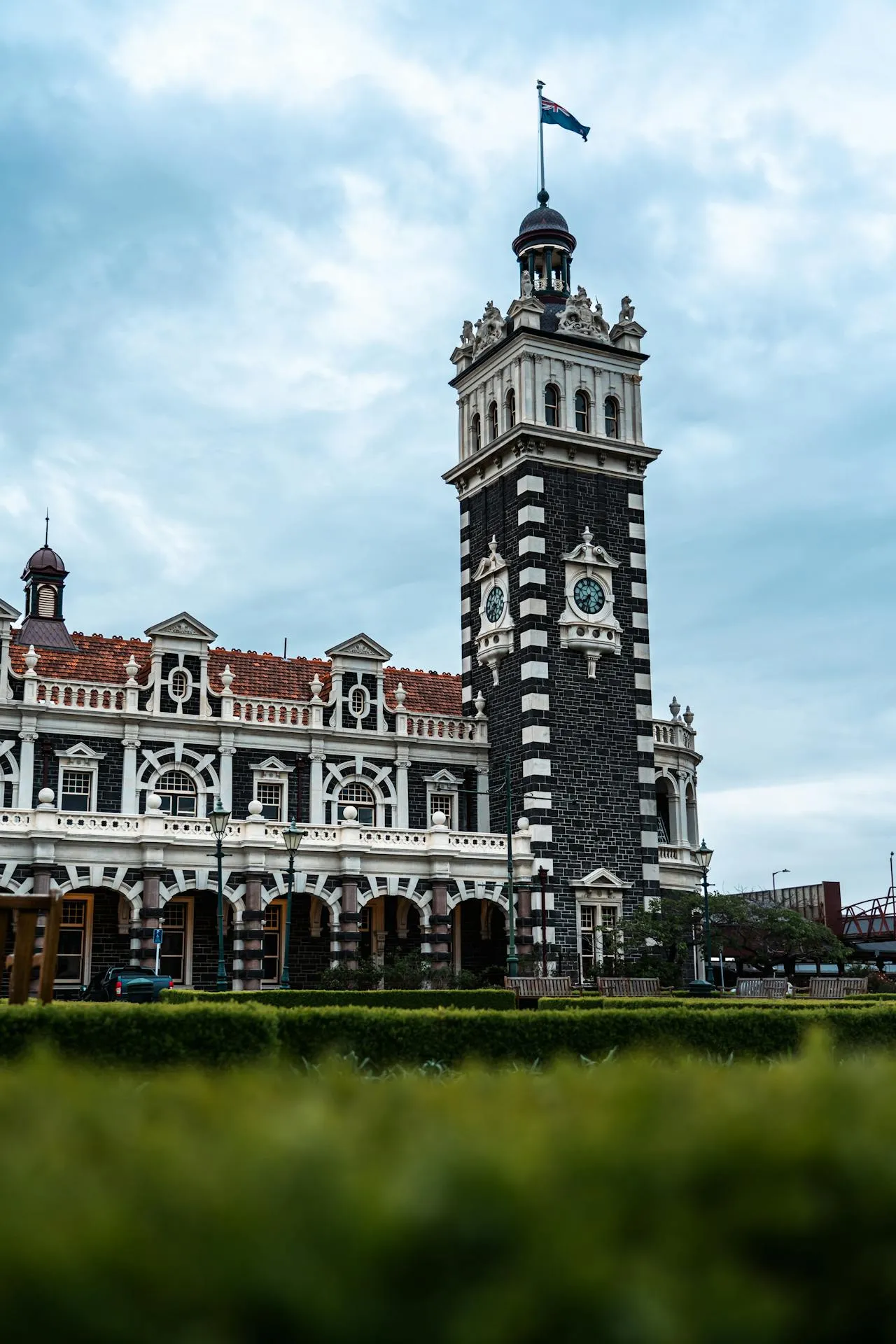
Dunedin Railway Station is frequently cited as one of the finest railway stations in the Southern Hemisphere and was voted New Zealand's most beautiful building by the country's Royal Institute of Architects. The Flemish Renaissance Revival building, completed in 1906 to a design by New Zealand Railways' chief architect George Troup (nicknamed "Gingerbread George" for his ornate style), is constructed in black basalt and white Oamaru limestone in striking chequered patterns.
The interior is equally elaborate: a mosaic tile floor incorporating over 725,000 Minton tiles, stained-glass windows bearing the NZR monogram, and a Royal Doulton ceramic frieze running around the walls. The building no longer serves regular passenger rail but operates as a major tourist attraction, housing the New Zealand Sports Hall of Fame museum on the upper floors and a photographic gallery. Heritage train excursions — the Taieri Gorge Railway — depart from the station, allowing visitors to combine the architectural experience with one of New Zealand's finest scenic train journeys. Dunedin's Saturday Farmers' Market operates in the station forecourt and is excellent.
Larnach Castle
Larnach Castle is New Zealand's only castle and an extraordinary piece of Victorian excess perched high on the Otago Peninsula with sweeping views of the harbour and peninsula in every direction. Built from 1871 by William Larnach — a flamboyant banker and politician — the castle took 200 workers three years to construct the shell and a further twelve years to complete the interior, with craftsmen imported from Europe to produce the elaborate plasterwork ceilings and hand-carved marble fireplaces.
The castle's history is as dramatic as its architecture: Larnach's personal life ended in tragedy — he shot himself in the Parliament buildings in 1898 — and the castle passed through various unsatisfactory owners before being purchased by the Barker family in 1967, who have spent decades restoring it to its original Victorian splendour. The grounds include a 14-hectare garden with plantings from around the world, including a remarkable collection of New Zealand native plants. The castle offers accommodation in the renovated stables and garden lodge — staying overnight at Larnach is one of the more unusual experiences New Zealand offers a visitor. Booking for overnight stays well in advance is essential.
Baldwin Street
Baldwin Street holds the Guinness World Record as the world's steepest residential street, with a gradient of 1:2.86 (35 percent) at its steepest point. Located in the North East Valley suburb just three kilometres from central Dunedin, it has become one of the city's most visited attractions — not because it is particularly beautiful, but because it is genuinely startling in person. Walking up it is a genuine physical challenge; running up it (as participants in the annual Gutbuster race do) is masochism.
The street was built at this improbable gradient because the city was laid out using a flat grid plan — without adjustment for the actual terrain — a decision that city planners had no reason to regret until concrete was poured. The houses on the street have floors built level with the gradient and must have necessitated some creative furniture placement over the decades. A small dairy (convenience store) near the bottom sells novelty chocolate balls, and most visitors treat a photo at the base of the steepest section as mandatory. The street is a pleasant 20-minute walk from the Octagon through the residential valley.
Best Time to Visit Dunedin
Dunedin's seasonal variation is among the most pronounced of any New Zealand city. Summer (December–February) brings the best weather: clear days, temperatures reaching 18–22°C, long evenings with excellent light, and the wildlife at its most active on the peninsula. The Otago Farmers Market on Saturday mornings and the craft beer scene are particularly active in summer. Winter (June–August) is cold and occasionally frosty, but Dunedin's university population keeps the city vibrant and the indoor culture — galleries, live music, craft breweries — is at its most concentrated. Spring (September–November) is ideal for wildlife: royal albatross chicks are visible, penguin nesting activity is high, and the city's gardens are at their most colourful.
Where to Stay
The Scenic Hotel Southern Cross in the Octagon is Dunedin's flagship hotel, a grand heritage building that has anchored the central city since 1883. The Distinction Dunedin Hotel offers reliable mid-range quality a short walk from the station. For boutique options, the Brothers Boutique Hotel in a converted heritage building near the Octagon is excellent, as is Lisburn House in the quieter Maori Hill suburb. The university area in North Dunedin has a good range of budget accommodation including Stafford Gables YHA, housed in a heritage building that embodies Dunedin's Victorian character.
Food & Drink
Dunedin's food and drink scene is driven largely by its university culture and has a genuinely creative, independent character. The Otago Farmers Market at the Railway Station on Saturday mornings is outstanding — a great introduction to local produce including the region's excellent salmon, venison, and sheep's milk cheeses. Emerson's Brewery on Anzac Avenue is Dunedin's most celebrated craft brewer and has a taproom well worth visiting. The Vault on Moray Place is a beloved institution for cocktails in a converted bank vault. The restaurant strip along George Street, St Andrew Street, and the Octagon offers everything from excellent Italian to Korean to modern New Zealand cuisine.
Practical Travel Tips
- Weather: Dunedin's weather can change rapidly; always carry a warm and waterproof layer regardless of the morning forecast.
- Otago Peninsula: Best explored with a tour operator for access to the best wildlife sites; a car is essential for self-guided exploration.
- Taieri Gorge Railway: Departs from the iconic Railway Station; advance booking recommended during summer.
- Craft beer: Emerson's and the Speight's Ale House are local institutions; the craft beer scene extends to numerous smaller taprooms.
- Weekend market: The Saturday Farmers' Market at the Railway Station (8am–12:30pm) is essential for any food lover.
Stay in Dunedin
Find the best deals on hotels and accommodation in Dunedin for your holiday getaway.
Browse Hotels