Auckland Travel Guide 2026 – Best Things to See & Do
Overview of Auckland
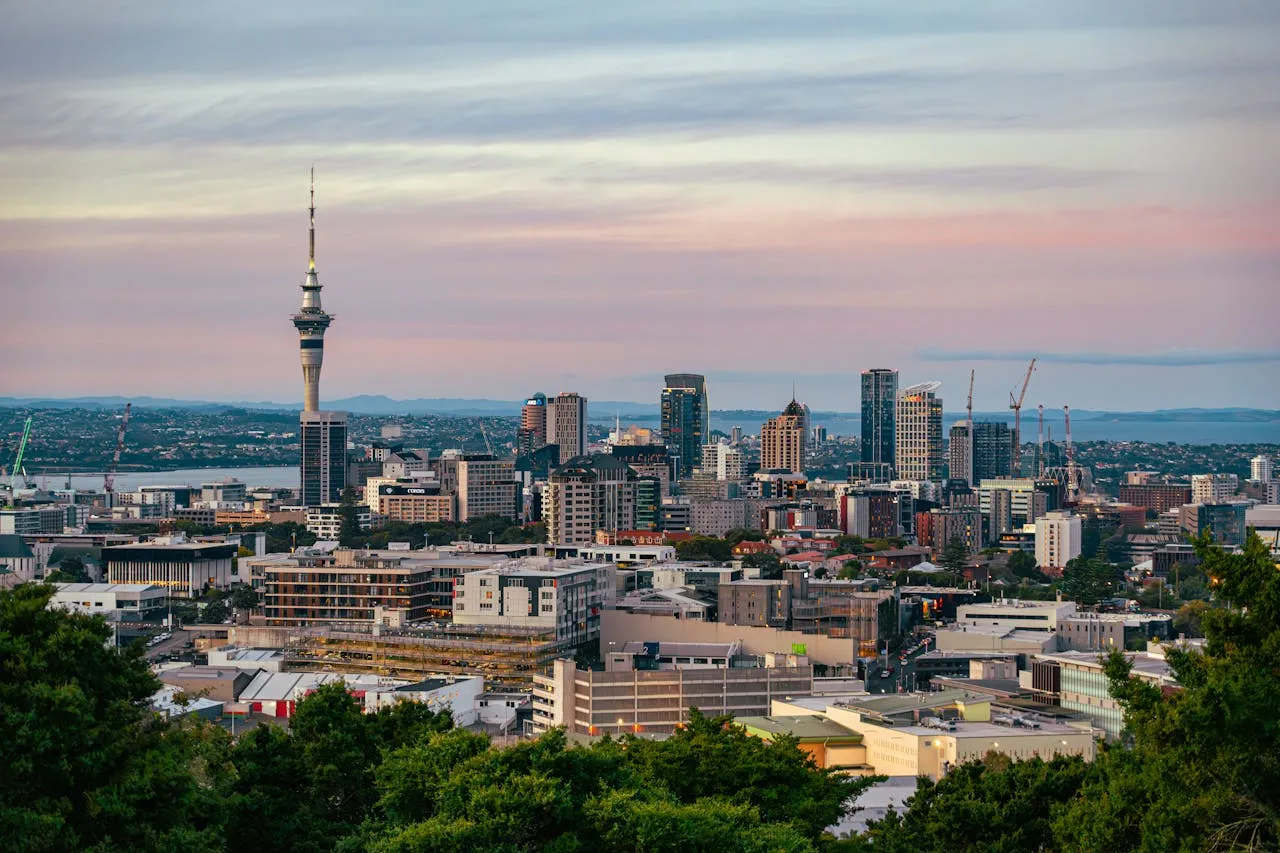
Auckland — Tāmaki Makaurau in te reo Māori — is New Zealand's largest and most cosmopolitan city, home to roughly a third of the country's entire population. Spread across a narrow isthmus separating two harbours, the city is built on 53 volcanic cones and surrounded by the glittering waters of the Waitemata and Manukau Harbours. Its skyline, dominated by the slender needle of the Sky Tower, is instantly recognisable, yet Auckland reveals far more personality once you venture beyond the central business district.
Known internationally as the "City of Sails," Auckland has more pleasure boats per capita than almost anywhere on earth — a reflection of the deep connection its residents share with the sea. On any given weekend, hundreds of yachts dot the Waitemata Harbour, while ferries criss-cross to islands that feel worlds away from the urban buzz. The city's rapid growth has also brought an extraordinary range of cuisines and cultures: Pacific Island, East Asian, South Asian, and European communities all contribute to a dining scene that punches well above its weight.
Beyond its harbours and cafés, Auckland sits within easy reach of world-class wine regions, ancient kauri forests, and geothermal parks. Whether you're spending a single day between flights or a full week exploring, Auckland offers a compelling mix of urban sophistication and raw natural beauty that keeps visitors returning year after year.
Getting to Auckland
Auckland International Airport (AKL) is the main gateway to New Zealand, receiving direct flights from Australia, Asia, the Pacific, the UK, and the United States. The airport is located in Māngere, about 21 km south of the city centre.
From the airport, the SkyBus express coach runs to the city centre every 10–15 minutes (journey time around 45 minutes) and is the most affordable option. Taxis and ride-share services (Uber, Ola) are plentiful. The City Rail Link has transformed inner-city rail — Puhinui station connects the airport via a short shuttle to the Southern Line, with trains running frequently to Britomart and beyond.
InterCity and FlixBus coaches connect Auckland to Hamilton, Rotorua, Wellington, and other North Island cities if you're travelling overland.
Top Attractions in Auckland
Sky Tower
Standing 328 metres above sea level, the Sky Tower is Auckland's most recognisable landmark and the tallest freestanding structure in the Southern Hemisphere. The observation decks offer 360-degree panoramic views stretching across both harbours, the Hauraki Gulf, and on clear days all the way to the Coromandel Peninsula. For those who prefer their thrills at altitude, the SkyJump — a controlled base jump from 192 metres — and the SkyWalk, a guided walk around the outer rim of the tower's observation deck, are unforgettable experiences. Inside, the ORBIT 360° Dining restaurant rotates once every hour, giving you a full circuit of the skyline over a leisurely meal. Even if you skip the adventure activities, the views alone justify the entrance fee, particularly at sunset when the harbour turns gold and the city lights begin to flicker on below.
Waiheke Island
Just a 35-minute ferry ride from downtown Auckland, Waiheke Island feels like a different world. Often called the "Island of Wine," Waiheke is home to over 30 boutique wineries, many of them perched on hillsides with sweeping views across the Hauraki Gulf. Spend a morning on a guided wine tour tasting award-winning olive oils and Bordeaux-style reds, then head to one of the island's beautiful sandy beaches — Oneroa, Onetangi, and Palm Beach are all popular choices. The island also has a thriving arts community, with galleries, sculpture trails, and excellent farm-to-table restaurants. Waiheke is easily explored on foot, by bicycle, or via the local bus network. Ferries depart from the Downtown Ferry Terminal roughly every 30 minutes on weekdays; book ahead for weekend summer sailings.
Advertisement
Auckland War Memorial Museum
Crowning the green rise of the Auckland Domain, the War Memorial Museum is one of New Zealand's most important cultural institutions. The building itself is a striking neoclassical structure, and inside it houses three floors of nationally significant exhibitions. The ground floor's Māori Court is outstanding — a vast collection of taonga (treasures) including an intact 25-metre waka taua (war canoe) and a fully carved wharenui (meeting house). The natural history galleries on the upper floors cover New Zealand's extraordinary geological and biological story, from living dinosaurs (tuatara) to the giant moa. The memorial halls on the top level offer a respectful and moving tribute to the New Zealanders who served in the First and Second World Wars. A free Māori cultural performance is held daily. Allow at least two to three hours for a thorough visit.
Viaduct Harbour
The Viaduct Harbour precinct was transformed for the 1999/2000 America's Cup into a buzzing waterfront destination and it has retained that energy ever since. Dozens of restaurants, bars, and cafés line the water's edge — from casual fish and chip shops to upscale seafood restaurants and craft beer bars. During summer evenings, the area fills with people spilling out onto outdoor terraces as yachts glide past the pontoons. It's also a great spot for morning coffee and a waterfront stroll before the day's crowds arrive. The nearby Te Wero Drawbridge leads to Wynyard Quarter, an even more recent urban regeneration project with a sustainable fish market, weekend farmers' market, and family-friendly waterfront play spaces. Together, Viaduct and Wynyard form Auckland's most vibrant precinct.
Rangitoto Island
Rangitoto is Auckland's youngest and largest volcano, having erupted from the sea just 600 years ago — a blink of an eye in geological terms. The symmetrical cone visible from almost everywhere in Auckland is now a protected scenic reserve accessible by ferry from the CBD (journey time about 25 minutes). A well-formed track winds through lava fields colonised by the world's largest pohutukawa forest — these gnarled, salt-tolerant trees cling to bare basalt in extraordinary fashion. The summit track takes about 45 minutes each way from the wharf and rewards walkers with a spectacular panorama of the Hauraki Gulf and the Auckland skyline. You can also explore the lava caves and, on the island's sheltered side, swim at the Domain with its wooden bathing sheds that date back to the 1920s.
Best Time to Visit Auckland
Auckland enjoys a mild, subtropical climate year-round, but the timing of your visit makes a real difference to your experience. Summer (December–February) is the peak season: long sunny days, warm temperatures (average highs around 23°C), and the city at its most vibrant. Beaches, ferry services, and outdoor events are all in full swing, but accommodation prices peak and popular spots fill up quickly. Book ahead.
Autumn (March–May) is arguably the best time to visit: the summer crowds thin out, the weather remains warm, and the Hawke's Bay and Marlborough wine regions are mid-harvest if you're planning a road trip. Winter (June–August) brings cooler, wetter weather (average highs around 15°C), though it rarely gets very cold. Many attractions are quieter and accommodation is cheaper. Spring (September–November) sees the city bloom with jacarandas and pohutukawa blossoms beginning to appear.
Where to Stay
City Centre & Viaduct Harbour is the most convenient base, with top-tier hotels (Grand Hyatt, Cordis Auckland) clustered near the Sky Tower. Excellent for first-time visitors wanting to walk everywhere.
Ponsonby & Grey Lynn are Auckland's coolest inner suburbs — independent cafés, boutiques, and some of the best restaurants in the city. A 20-minute walk or quick Uber from the waterfront, with a range of boutique hotels and Airbnbs.
Parnell offers a quieter, heritage feel with tree-lined streets, galleries, and easy access to the Domain and museum. Good midrange options here.
Devonport (accessible by ferry) is a charming Victorian seaside village — ideal if you want to escape the urban energy while still being 12 minutes from the CBD by ferry.
Food & Drink
Auckland's dining scene reflects its multicultural character. For breakfast, head to Ponsonby Road or Karangahape Road (K'Rd) where specialty coffee and creative brunch menus are taken seriously. Seafood is a highlight: the fish markets at Wynyard Quarter sell the freshest snapper, oysters, and crayfish. For authentic Pacific Island cuisine — Samoan, Tongan, and Niuean dishes — explore the restaurants in Otara and Manukau in South Auckland.
The city also has a thriving craft beer scene, with several excellent brewpubs in the Britomart precinct and around K'Rd. Wine lovers should visit Vinnie's in Ponsonby or explore the Waiheke wineries on a day trip.
Practical Travel Tips
- AT HOP card: Load up an Auckland Transport HOP card for discounted fares on buses, trains, and ferries. Available at convenience stores and train stations.
- Driving: Auckland's traffic is notoriously congested during peak hours (7–9am and 4–7pm). Avoid driving into the CBD on weekdays if possible.
- Tipping: Not customary in New Zealand — exceptional service might warrant 5–10%, but it's never expected.
- Weather: Pack a light rain jacket regardless of the season — Auckland can produce a shower at any time of year.
- Currency: NZ Dollar (NZD). Contactless card payment is accepted almost everywhere.
Stay in Auckland
Find the best deals on hotels and accommodation in Auckland for your holiday getaway.
Browse Hotels